1,280 kW across four charging points
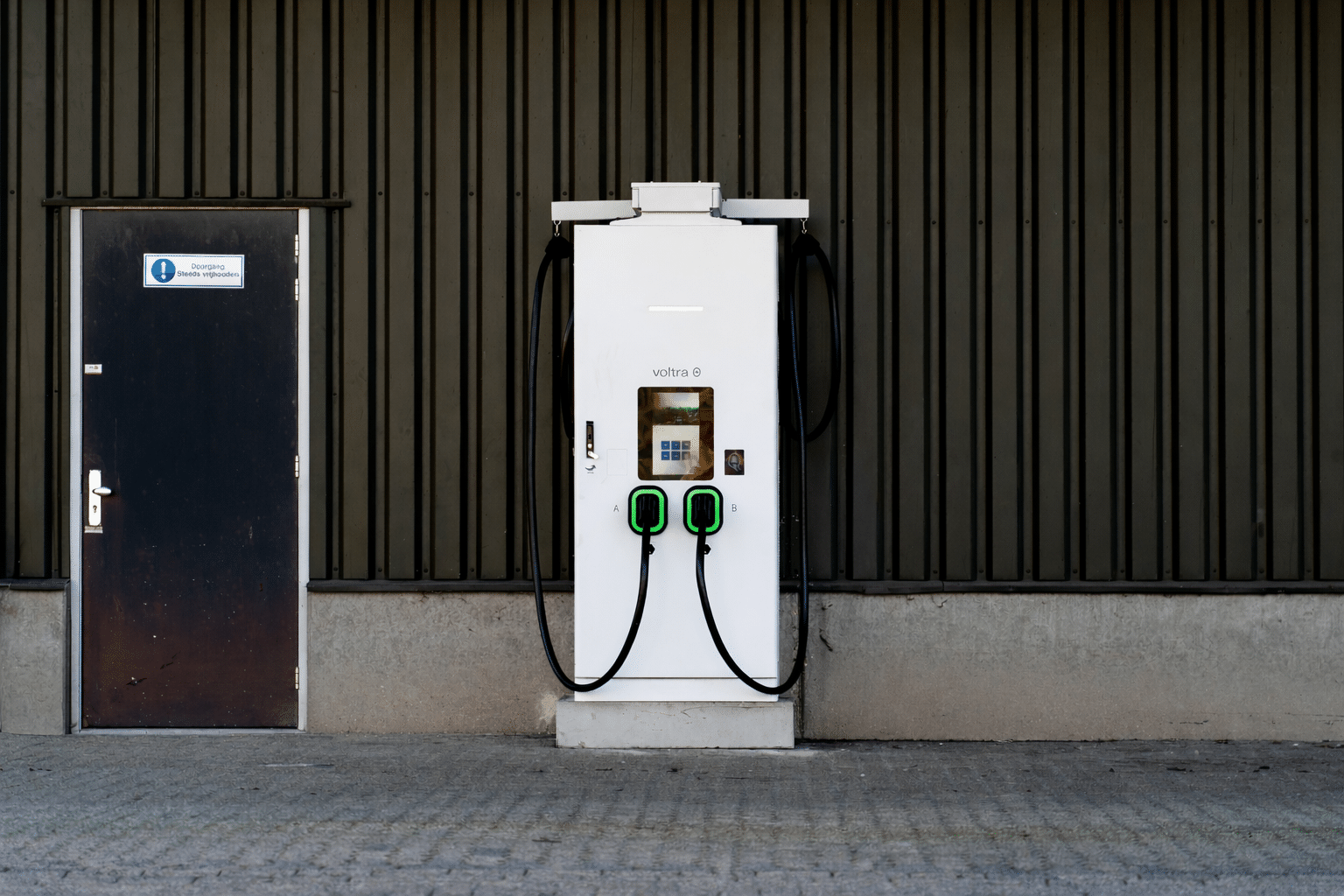
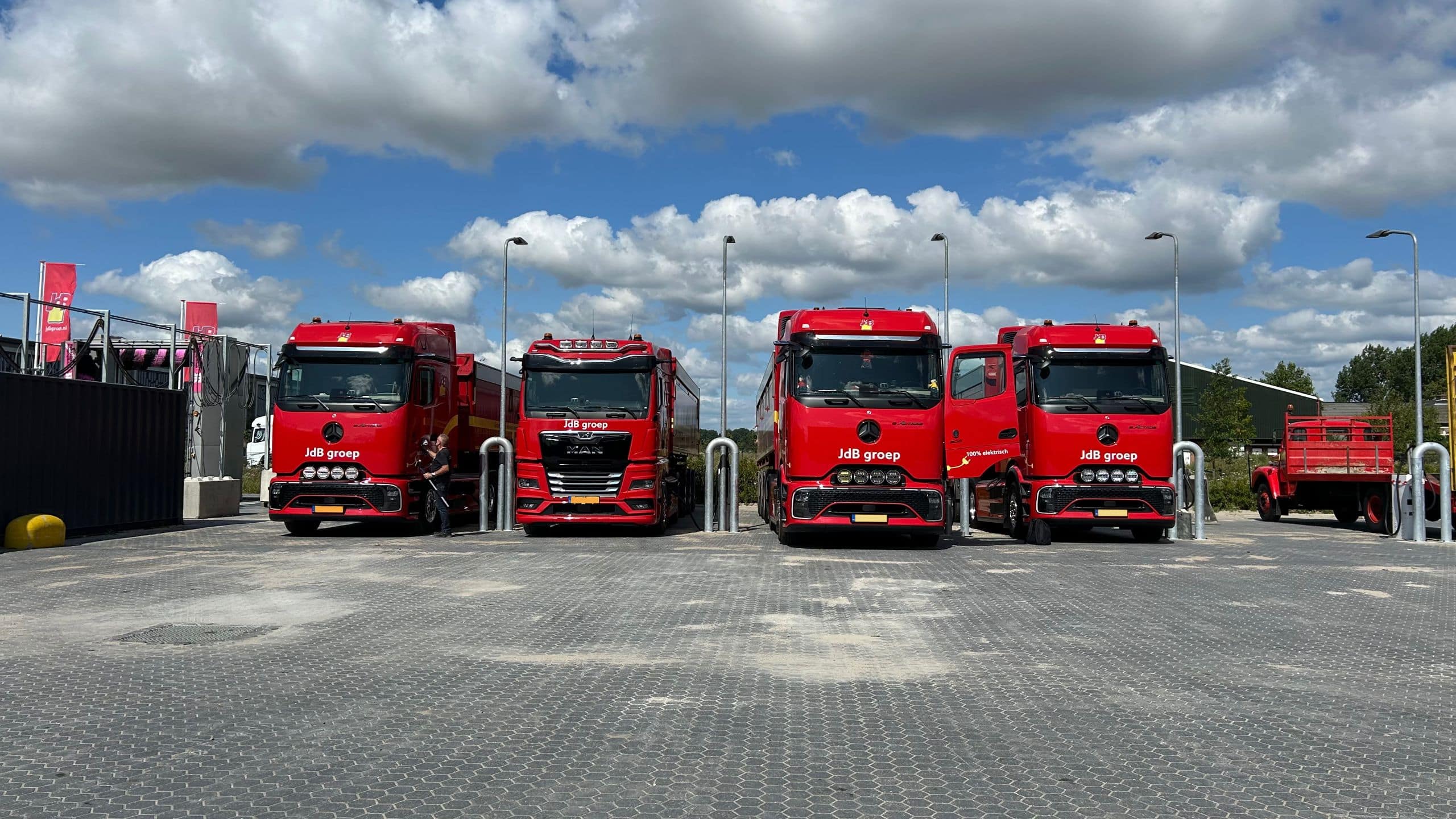
At Hartog & Bikker, the requirement was that the trucks must be fully charged within the available downtime. This starting point determined the entire design. A 1,280 kW Voltra Power Unit was selected, with two 500A dual dispensers. This provides four charging points with the highest charging current currently available. The power has deliberately not been spread across many charging points, but concentrated on a small number, precisely because speed is more important here than quantity.
The charging bay as a design starting point
The result: a lorry with a 600 kWh battery pack charges to full capacity in 1 hour 30 minutes to 1 hour 45 minutes and sets off with a full battery for its next journey. This fits within the charging window available to the operation, without the need to build the schedule around it.
That is the difference between charging infrastructure that supports operations and charging infrastructure that restricts them. At Hartog & Bikker, the journey dictates the schedule, not the charger.
Sunlight and the charging window coincide
Solar panels had already been installed at the site. This has proved to be a fortunate combination: the charging windows largely coincide with daylight hours, precisely when the site’s own energy generation is at its highest. As a result, the trucks are charged largely using electricity generated on the site’s own roof.
This delivers two benefits. Transport becomes demonstrably more sustainable, as the kilowatt-hours consumed by the lorry come largely from on-site renewable generation. And it delivers financial benefits: by charging using self-generated, renewable electricity, green EREs are generated, which have a higher value than when charging with ‘grey’ electricity from the grid. The charging infrastructure thus becomes not just a cost item, but a source of income.
Next step: MCS
Later this year, the charging hub will be expanded to include an MCS (Megawatt Charging System) dispenser capable of delivering up to 1,500 A, connected to the same 1,280 kW power unit. This will further reduce charging times.
This is more than just a technical upgrade. Shorter charging times mean that an electric lorry can be deployed more frequently and that journeys become possible which are not yet profitable today. MCS is the step that takes heavy-duty electric transport from regional to long-distance operations — and Hartog & Bikker will be one of the first locations in the Netherlands where this is put into practice.
Ready for tomorrow
As the MCS dispenser is connected to the existing power unit, the expansion does not require any new core infrastructure. The system that currently charges lorries to full capacity within their time window will soon be ready for the next generation of charging technology.