Contents
All-in-one vs. Modular charge points
Switching to an electric fleet brings new technical issues. One of the most important decisions when setting up your charging plaza is the choice of architecture for your chargers. Do you opt for an All-in-one solution or a Modular system? In this blog, we explain the crucial differences and help you make the right choice for your transport company.
(Reading tip: Did you read our earlier blog on What is DC charging? already read)
The All-in-One charger: compact and powerful
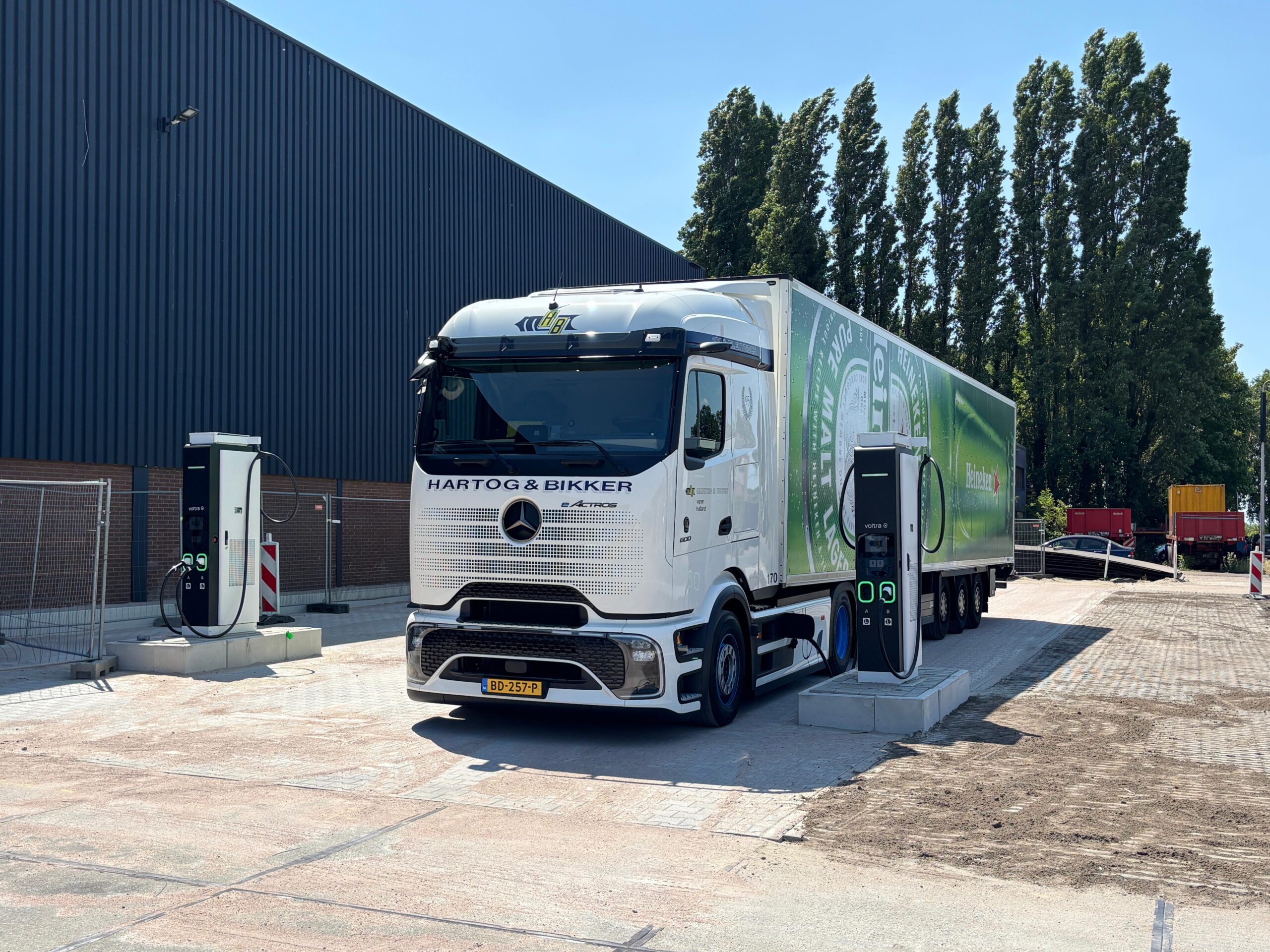
With an All-in-one charger (also called a 'standalone' charger), all components are in one housing. Think inverter, control screen, charging cables and cooling systems. You often recognise these units from fast charging stations along the motorway.
Features and limitations
All-in-one chargers are excellent for locations with limited space or smaller charging requirements, but they have a significant limitation in power distribution.
- Static distribution: Do you have a 400kW charger with two plugs? Then one vehicle can charge 400kW. If two vehicles are connected, the power is divided (e.g. 200kW per vehicle).
- The limitation: The power of one pole cannot be shared with the pole next to it.
- Example: You have two 400kW chargers (total of 4 plugs) and there are 3 vehicles. Two vehicles charge with 200kW and the third vehicle with 400kW. In a modular system, they could have charged all three with about 266kW, getting the total fleet back on the road faster.
On offer at Voltra: Our All-in-one chargers are available with capacities ranging from 60kW to 800kW and are suitable for simultaneous charging of two vehicles as standard.
Modular systems: Maximum flexibility and scalability
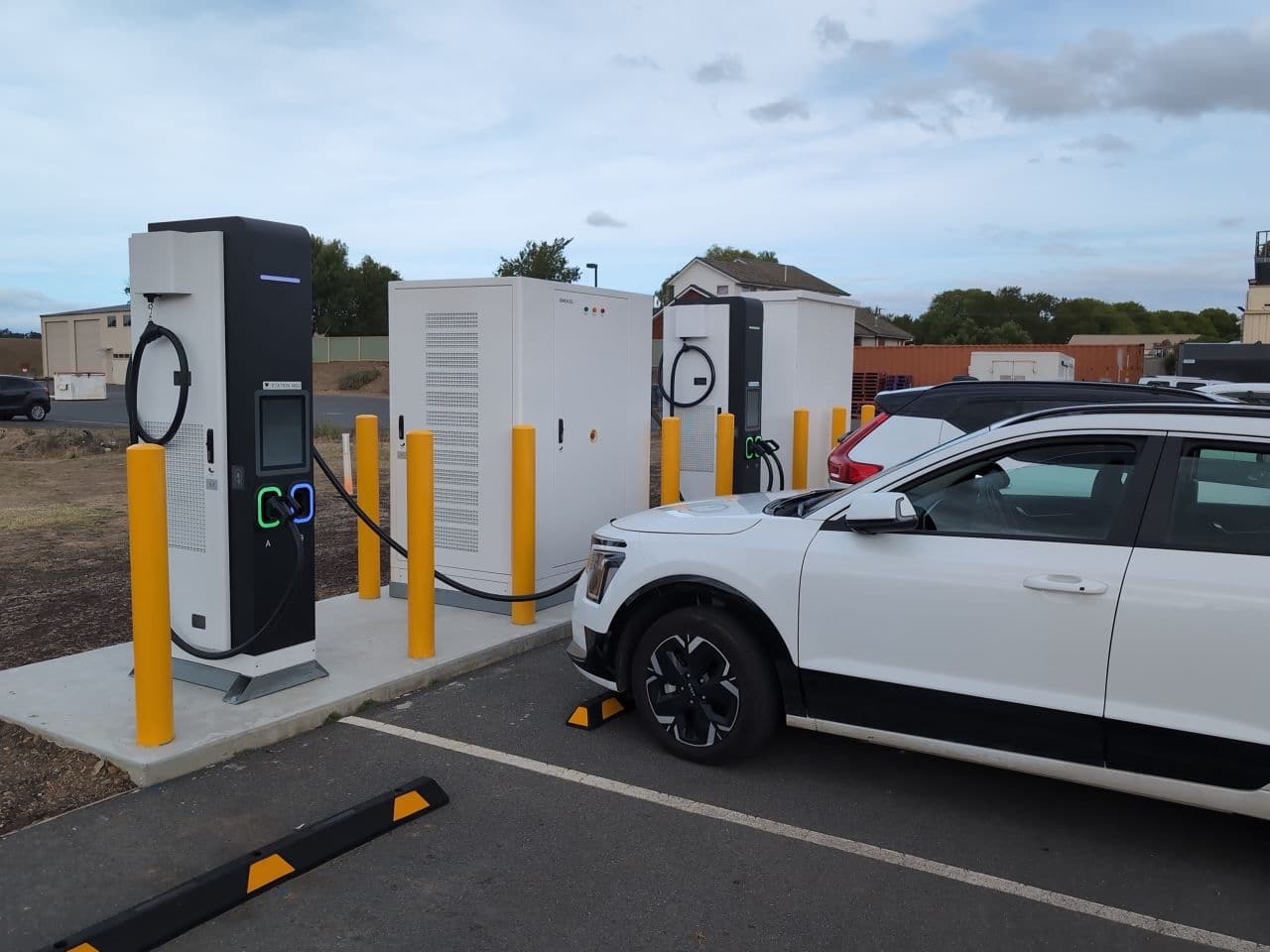
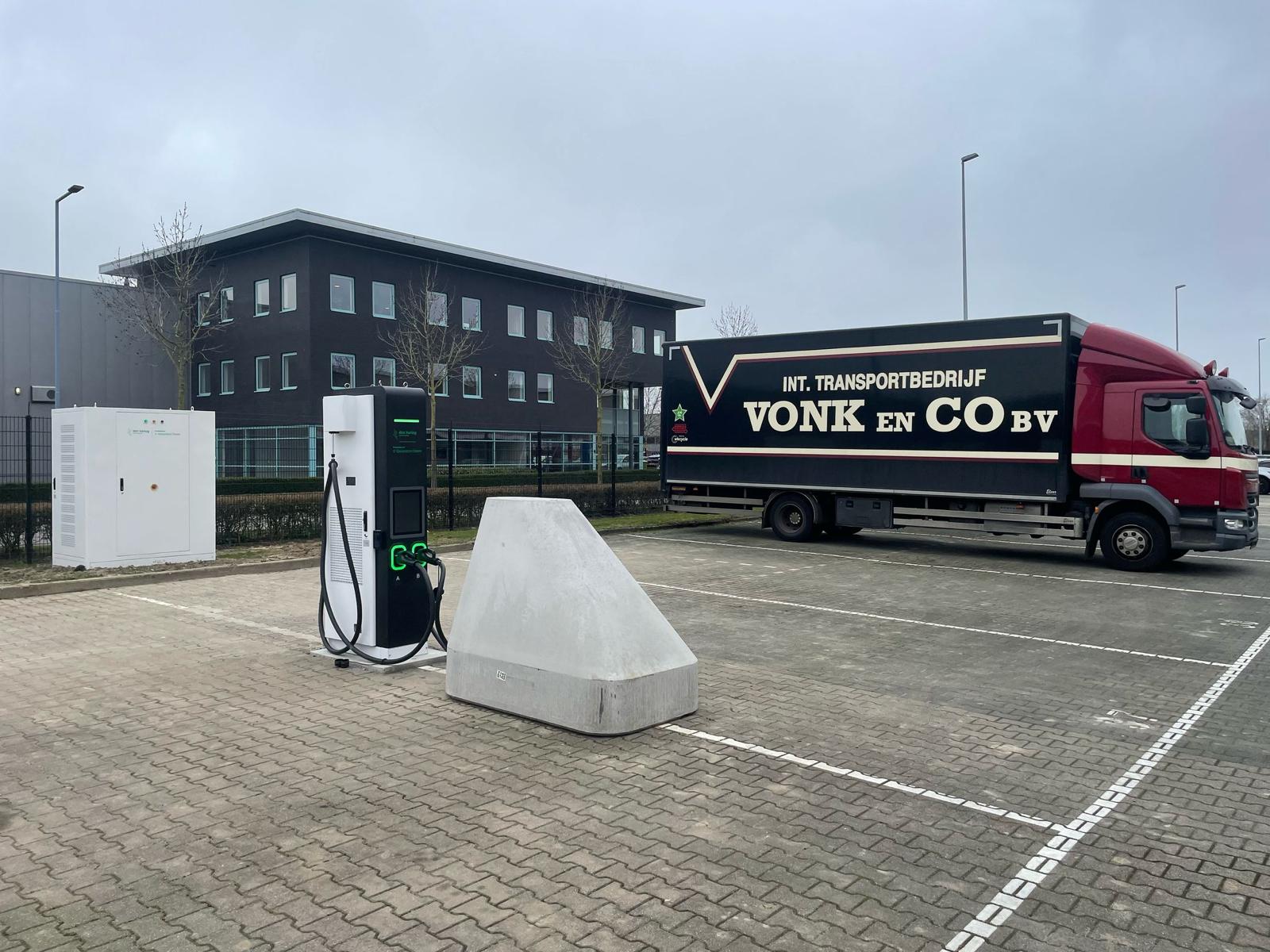
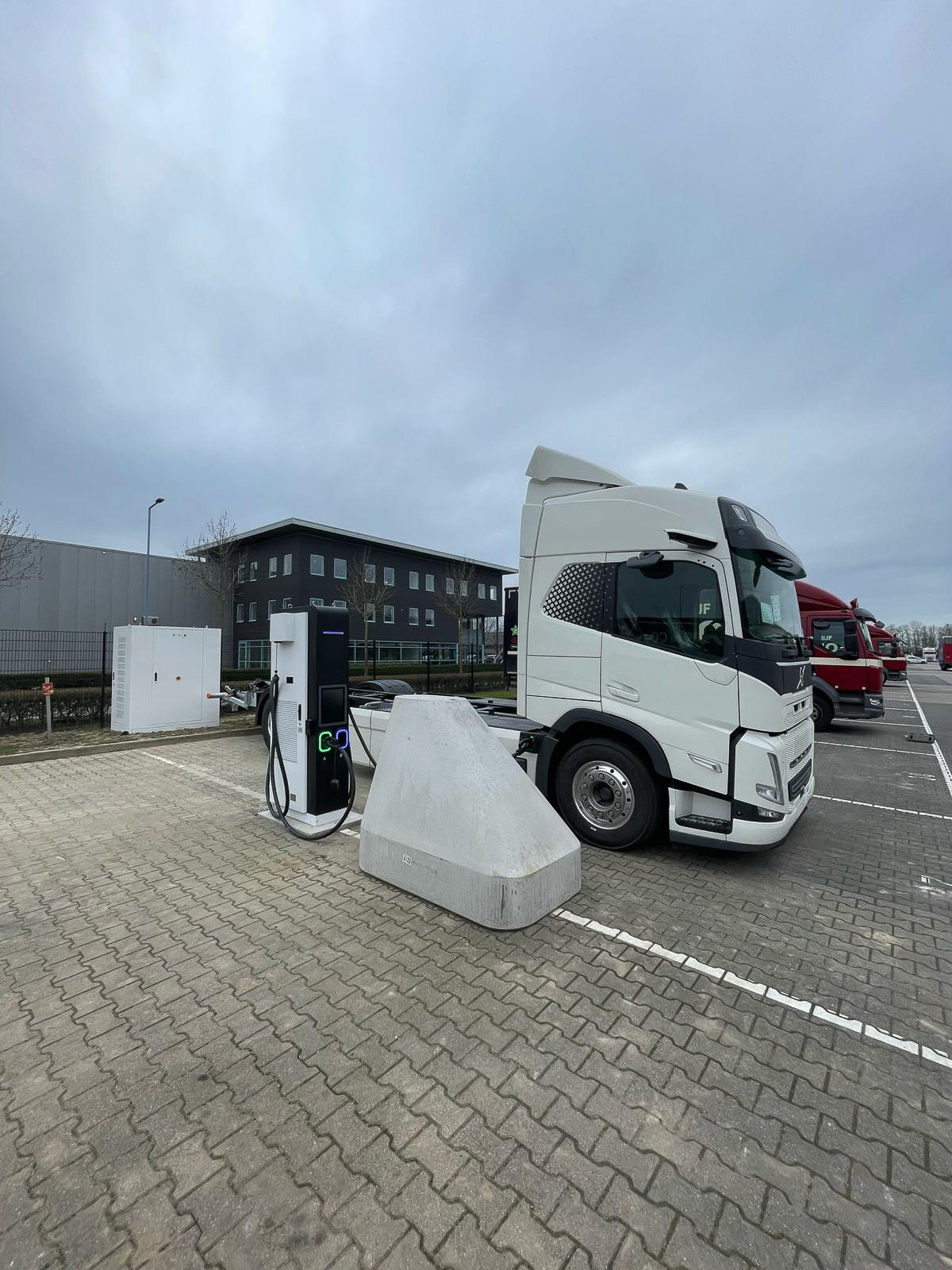
With a modular system, the technology is split. The 'intelligence' and power are in a central Power Unit, while the charging itself is done via slim dispensers (charging points) in the field.
The advantages of modular construction:
- Dynamic power distribution: The total power of the Power Unit is cleverly distributed across all connected charging points. As a result, each vehicle always receives the maximum available power.
- Spatial freedom: The large Power Unit can be placed in a remote location (e.g. behind a building or near the transformer). In parking areas, only the compact dispensers are located.
- Easy installation: Because the main power supply goes to one central point, installation is often more efficient.
- Future-proof: You can start with a lower capacity and later easily add power modules or connect additional dispensers as your fleet grows.
On offer at Voltra: Our Power Units range from 360kW to 1280kW. The dispensers are available in single or double versions (200A to 500A, with a boost function up to 700A).
Innovation alert: From 2026, we will introduce the MCS (Megawatt Charging System) charge point, which allows a full Power Unit of 1.2MW to be utilised via a single plug.
The differences at a glance
| Feature | All-in-One Charger | Modular System |
| Structure | All-in-One housing | Central Power Unit + separate dispensers |
| Power | 60kW to 800kW | 360kW to 1280kW |
| Power distribution | Per unit (limited) | Dynamic over all charge points |
| Space usage | Takes up more space at the charging location | Very compact at the charging location |
| Scalability | Placing a new unit | Add power modules or dispensers |
Which configuration suits your business?
The choice between All-in-one and modular depends on your current fleet, available space and growth ambitions.
- Do you opt for a compact solution for a few vehicles? Then All-in-one is often the best route.
- Do you want a future-proof charging station that grows with your ambition and where power is optimally utilised? Then a modular system is the better choice.
Are you curious which system provides the highest return for your situation?