Contents
What is DC charging?
Anyone making the switch to electric transport immediately comes across the terms AC and DC. While AC charging is often the standard for passenger cars in the driveway, DC charging is the backbone of the logistics sector. But what exactly happens in that big loading cabinet and why is it essential for your trucks? In this blog, we dive deep into the technology.
The basics: alternating current (AC) vs direct current (DC)
To understand what a DC charger does, we need to look at how power is stored. A truck battery (accumulator) can only store Direct Current (DC - Direct Current).
However, the power grid always supplies Alternating Current (AC). So there has to be a conversion somewhere:
- In AC charging: The truck receives alternating current. A small inverter at the truck (the Onboard Charger) converts this to DC for the battery. Due to space and weight limitations in the vehicle, this converter is often limited in power (e.g. 11kW or 22kW).
- In DC charging: Conversion from AC to DC takes place outside the vehicle, in the charging station itself. This allows the inverter to be much larger, heavier and more powerful. Power goes directly to the battery, without the intervention of the limited Onboard Charger.
How does a DC charger work technically?
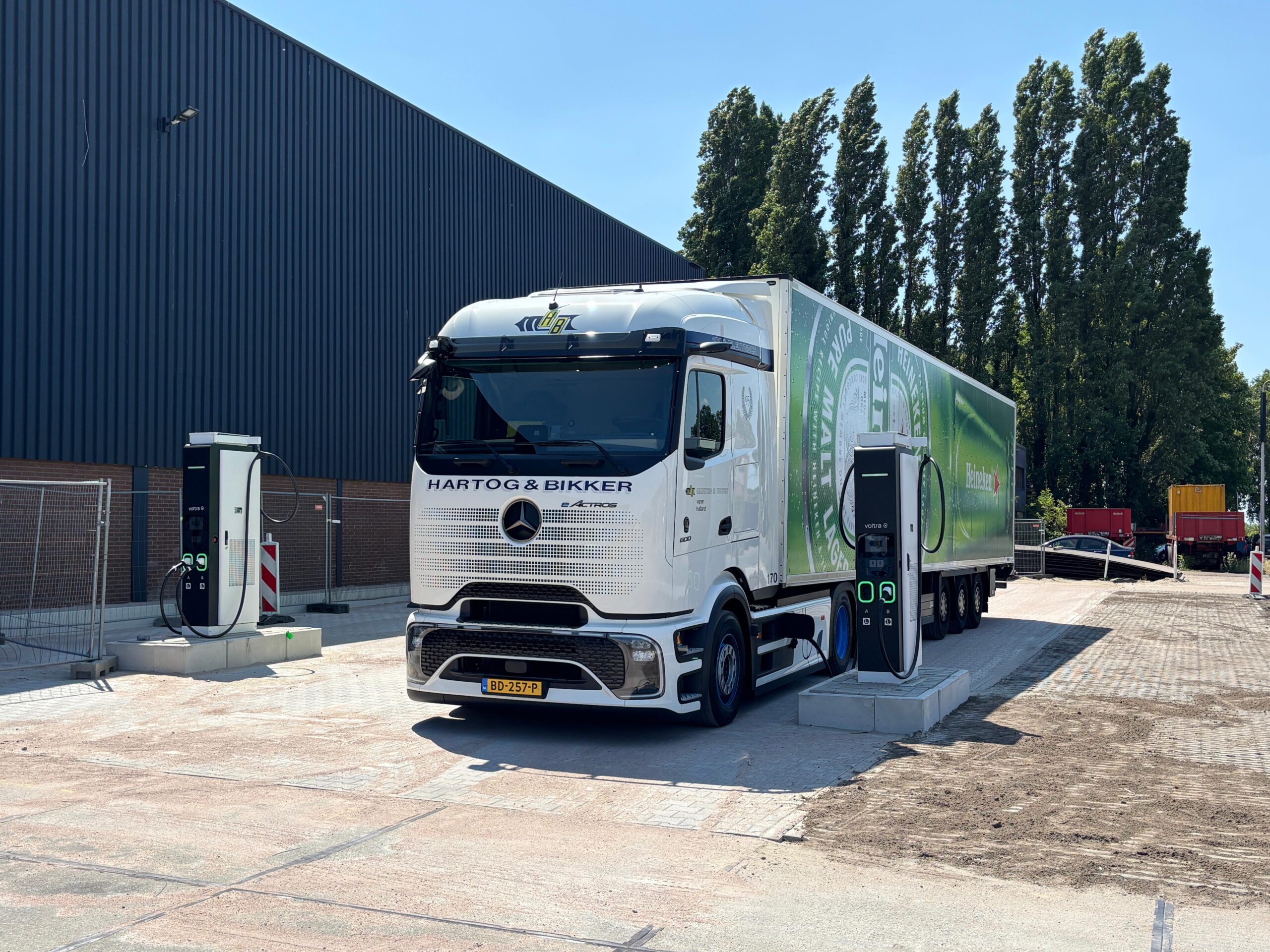
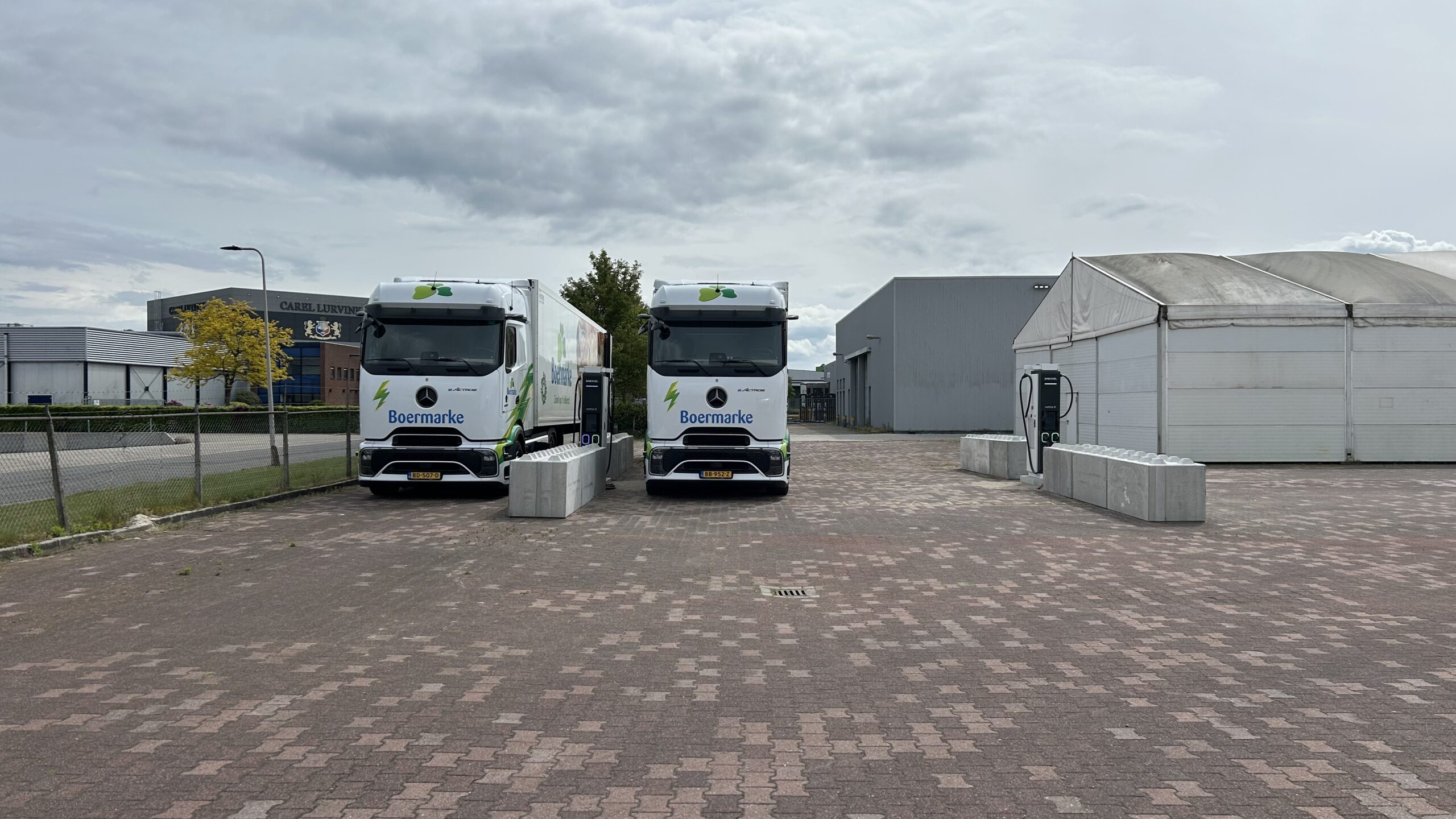
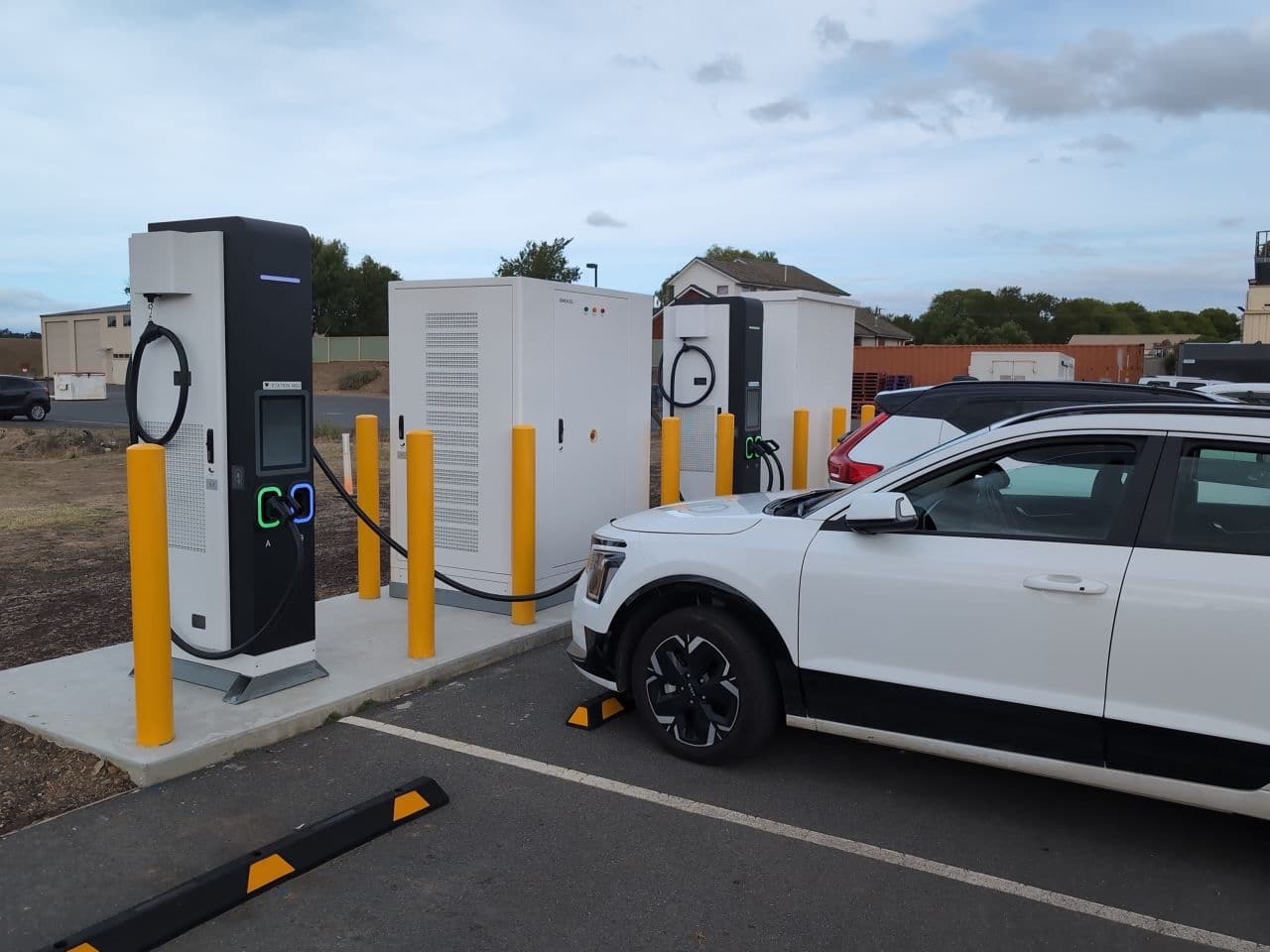
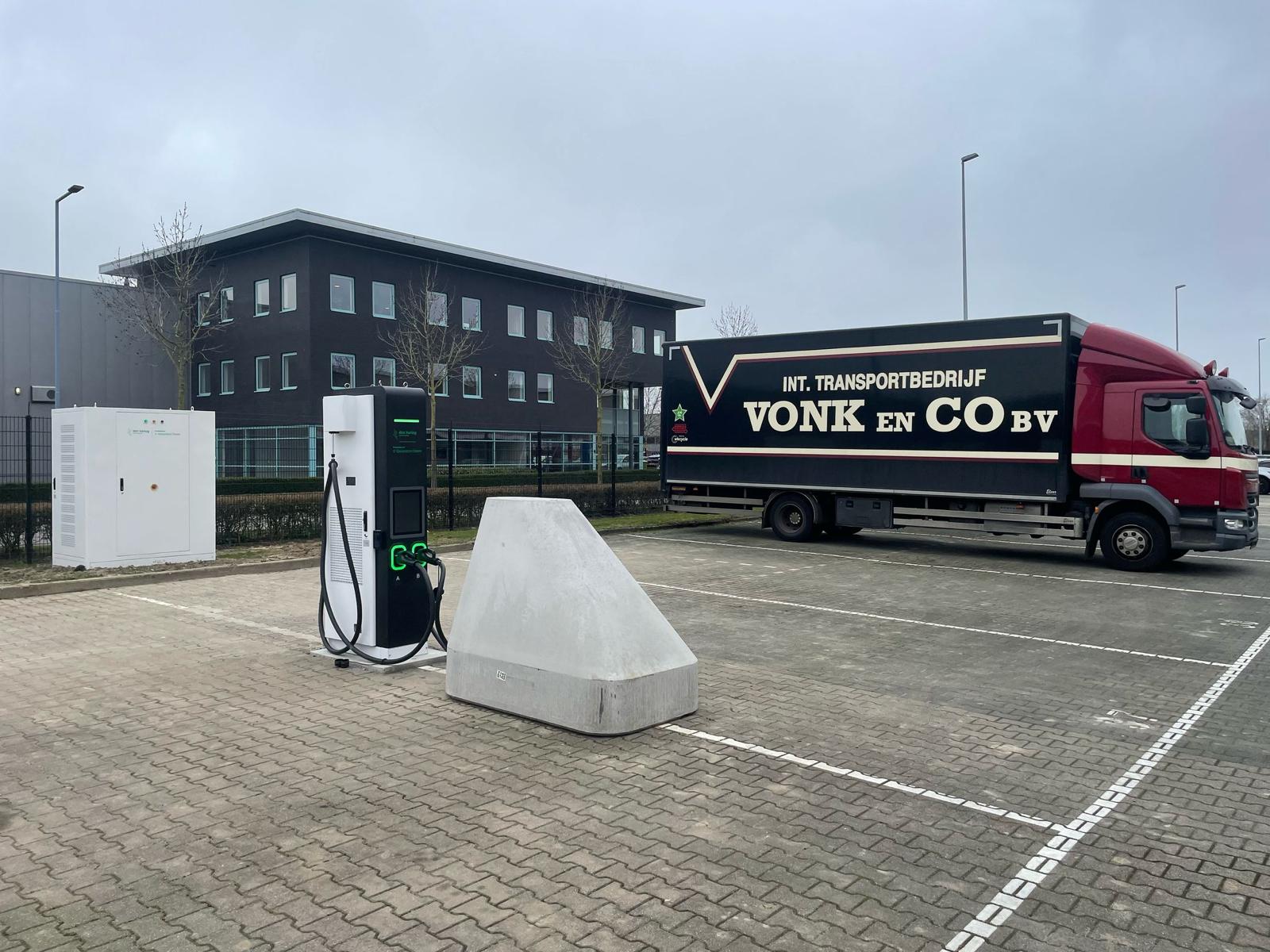
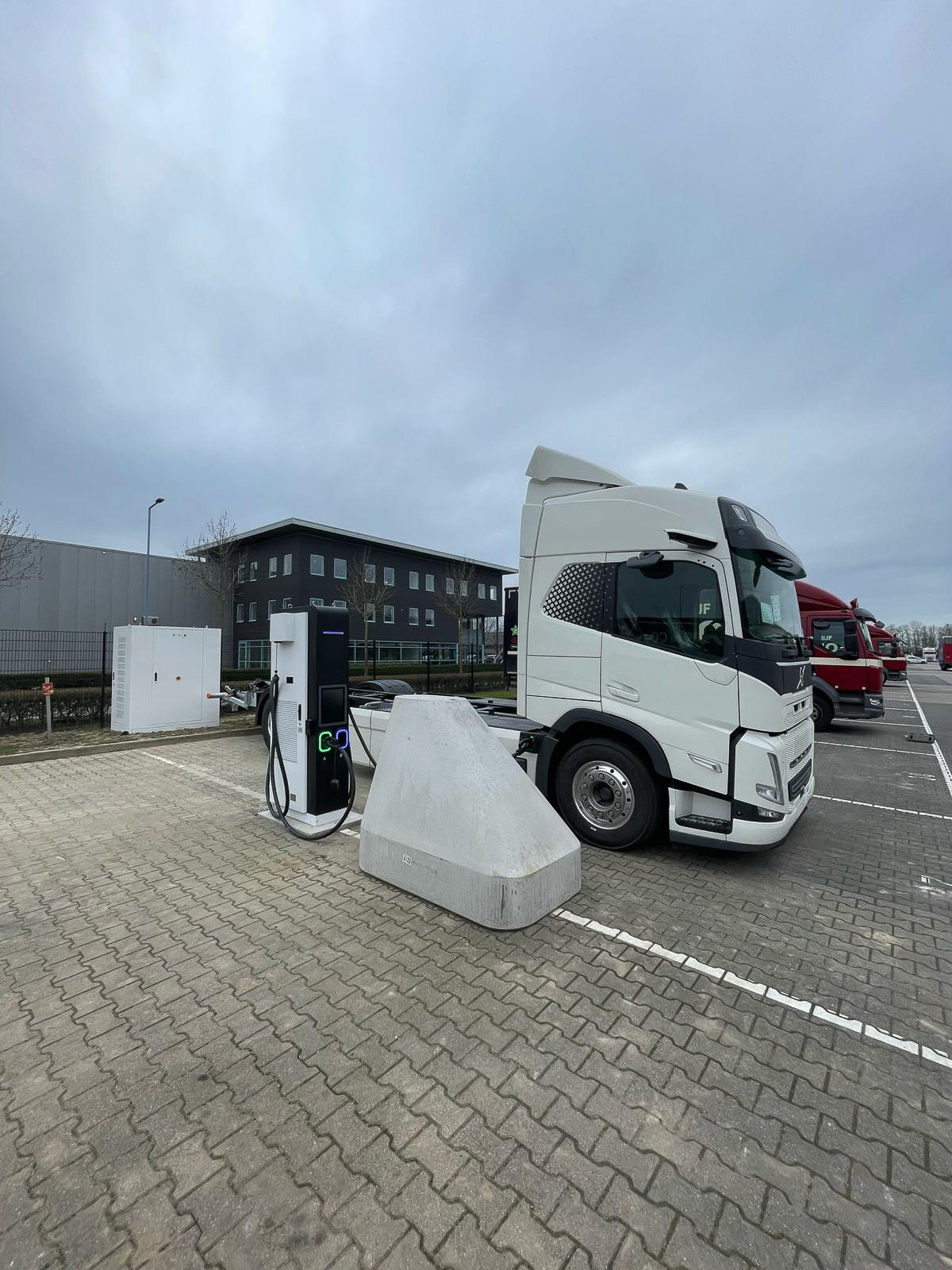
A DC charging station from Voltra is basically a powerful computer combined with a series of high-quality power modules. The process involves three crucial steps:
1. Rectification (The transformation)
The core charger consists of Power Modules. At Voltra, we use modules from 20kW or 40kW. These modules draw alternating current from the grid and use power electronics (rectifiers) to convert it into stable direct current. By stacking these modules, we achieve power outputs of up to 1280kW.
2. Communication
As soon as the driver plugs in the CCS plug (or in future the MCS plug), a 'digital handshake' takes place between the charger and the truck's Battery Management System (BMS). The truck tells the charger exactly:
- What the current charging status (State of Charge - SoC) is.
- How much power the battery can currently handle (depending on temperature and cell voltage).
3. Monitoring and Cooling
As high power releases a lot of heat, DC chargers are equipped with active cooling systems. For ultra-fast charging (above 300A/400kW), even the charging cables are often liquid-cooled to prevent them from overheating.
When is DC charging the right choice?
DC charging is not always necessary, but it is indispensable in the following scenarios:
- Intermediate charging during rest periods: When a driver rests for 45 minutes, hundreds of kilometres of range must be recharged in a short time. Only DC fast charging (150kW+) can facilitate this.
- High turnover rate: Companies where vehicles run in shifts and are only at the depot for short periods of time.
- Heavy loading and long distances: High-consumption trucks simply need more energy than an AC charger can provide overnight.
AC vs. DC: a quick comparison
| Feature | AC charging (Standard) | DC charging (Fast/Ultra-fast) |
| Inverter location | In the vehicle (Onboard) | In the charging station (Offboard) |
| Charging speed | Slow (11kW - 43kW) | Fast to Ultra-fast (60kW - 1280kW) |
| Costs | Lower | Higher (due to complex technology) |
| Application | Overnight charging / Long downtime | Fast charging / Intensive use |
The future: from CCS to MCS
Currently, most electric trucks charge via the CCS2 standard, which is technically limited to around 400-500kW. For the heaviest transport applications, we at Voltra are already working on integrating MCS (Megawatt Charging System). This allows us to achieve charging speeds of more than 1000kW (1 Megawatt), filling up even the largest batteries in less than half an hour.
Conclusion
DC charging is the technology that enables electric transport on a large scale. By placing the conversion of power outside the vehicle, the limitations of the truck disappear and the charging speed is determined by the infrastructure on your site.